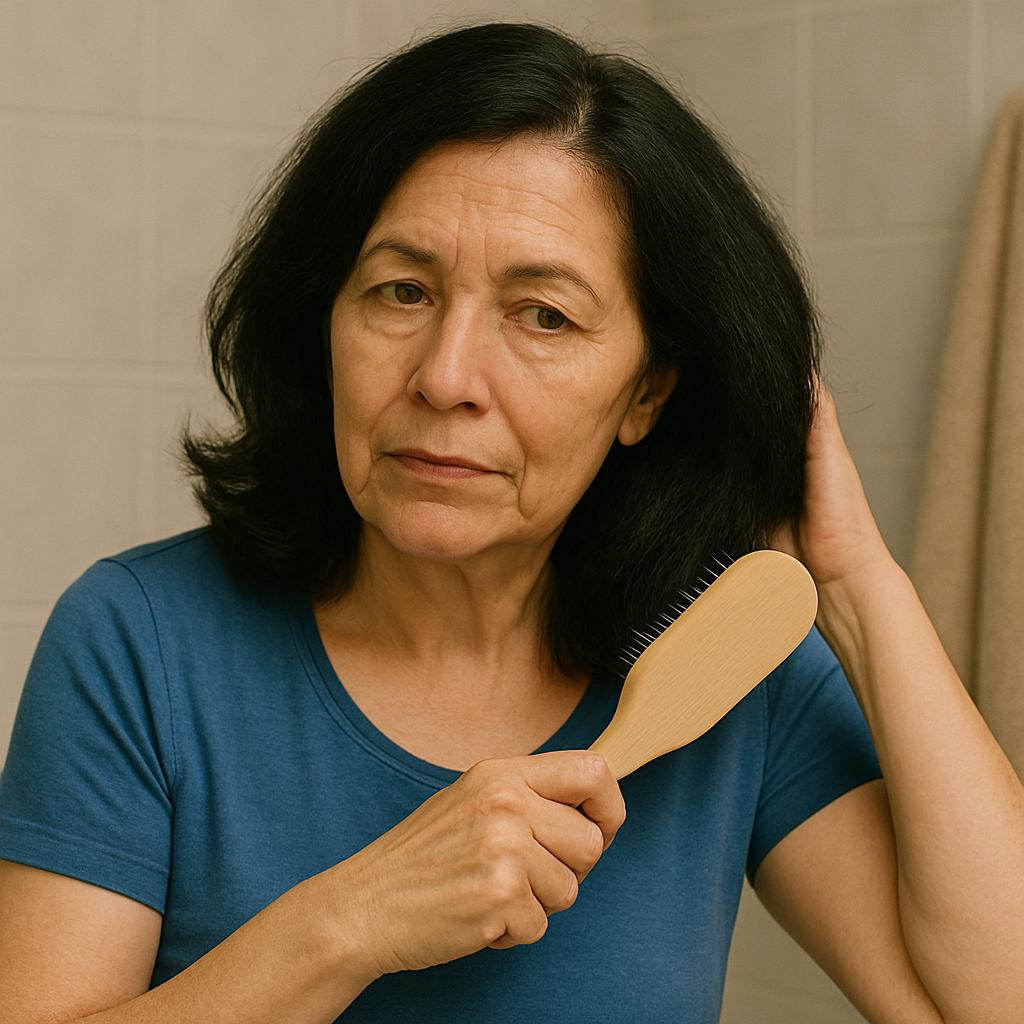
One protein quietly disappears… and everything starts sagging.
👉 Find out what your body’s silently running out of.
You hit your 30s thinking, “I got this.” Then one day, you catch yourself in the mirror and think…
Wait, when did THAT happen? Welcome to the invisible collapse.
It’s not just age. It’s one super important protein quietly slipping away while no one warns you it’s happening.
Let’s break it down—and see what your body’s actually missing.
Your Skin Starts to Sink
Wrinkles don’t just appear overnight. They’re the slow result of your skin losing its bounce. That bounce comes from collagen—a protein that keeps skin firm and stretchy. After 25, your collagen supply drops like your phone battery after a software update. By your 30s, you start noticing it… especially around your eyes and smile lines.
Your Hair Stops Playing Nice
Frizz, breakage, and hair that’s suddenly way too “meh”? That’s not just humidity or bad luck. Collagen feeds your hair roots and keeps strands strong and thick. When levels drop, your hair loses its shine—and starts acting like it’s going through something. (Because it is.)
Your Nails Go All Sad and Snappy
Brittle nails aren’t just annoying—they’re a sign. Healthy nails need collagen too. When you’re low, your nails crack, peel, or just never seem to grow. If you’ve been blaming your nail polish remover, your body may be yelling, “I need help down here!”
Your Joints Get Creaky
Remember when you could sit cross-legged for an hour and pop back up like a spring? Yeah, your joints remember too. Collagen keeps your cartilage cushioned. When it starts disappearing, your knees, hips, and shoulders feel like rusty hinges. That “morning stiffness” isn’t just age—it’s a cry for collagen.
Your Gut Says “Nope”
Your gut lining? Yep, made of collagen too. When levels drop, digestion gets weird. Bloating, gas, “mystery discomfort”… they could all be signs that your gut wall is thinning. Less collagen means less support—and more chances for stuff to leak or irritate. (Fun, right?)
Your Body Feels Less “Held Together”
This is the big one. Collagen is literally the glue that holds your body together. It’s in your muscles, bones, skin, tendons—everywhere. So when it fades? You start to feel like things are sagging, shifting, or slowing down. It’s like your internal scaffolding is missing a few key beams.
Your Skin Starts to Sink
Wrinkles don’t just appear overnight. They’re the slow result of your skin losing its bounce. That bounce comes from collagen—a protein that keeps skin firm and stretchy. After 25, your collagen supply drops like your phone battery after a software update. By your 30s, you start noticing it… especially around your eyes and smile lines.
Your Hair Stops Playing Nice
Frizz, breakage, and hair that’s suddenly way too “meh”? That’s not just humidity or bad luck. Collagen feeds your hair roots and keeps strands strong and thick. When levels drop, your hair loses its shine—and starts acting like it’s going through something. (Because it is.)
Your Nails Go All Sad and Snappy
Brittle nails aren’t just annoying—they’re a sign. Healthy nails need collagen too. When you’re low, your nails crack, peel, or just never seem to grow. If you’ve been blaming your nail polish remover, your body may be yelling, “I need help down here!”
Your Joints Get Creaky
Remember when you could sit cross-legged for an hour and pop back up like a spring? Yeah, your joints remember too. Collagen keeps your cartilage cushioned. When it starts disappearing, your knees, hips, and shoulders feel like rusty hinges. That “morning stiffness” isn’t just age—it’s a cry for collagen.
Your Gut Says “Nope”
Your gut lining? Yep, made of collagen too. When levels drop, digestion gets weird. Bloating, gas, “mystery discomfort”… they could all be signs that your gut wall is thinning. Less collagen means less support—and more chances for stuff to leak or irritate. (Fun, right?)
Your Body Feels Less “Held Together”
This is the big one. Collagen is literally the glue that holds your body together. It’s in your muscles, bones, skin, tendons—everywhere. So when it fades? You start to feel like things are sagging, shifting, or slowing down. It’s like your internal scaffolding is missing a few key beams.
Here’s the kicker:
Most of this starts before you feel it. By the time the mirror shows the signs, collagen’s been fading for years.
But what if you could stop the slow slide—and start rebuilding?
👉 Click below to find out how thousands of women are bouncing back (literally) from the invisible collapse.
Disclaimer: Statements on this website have not been evaluated by the Food and Drug Administration. Products are not intended to diagnose, treat, cure or prevent any disease. If you are pregnant, nursing, taking medication, or have a medical condition, consult your physician before using our products.
Not intended for children.
You should always consult with your healthcare practitioner prior to starting any new dietary supplement or program.
The information provided on this site is for informational purposes only and is not intended as a substitute for advice from your physician or other healthcare professional or any information contained on or in any product label or packaging. You should not use the information on this site for diagnosis or treatment of any health problem or for prescription of any medication or other treatment. Always consult with a healthcare professional before starting any diet, exercise or supplementation program, before taking any medication, or if you have or suspect you might have a health problem. You should not stop taking any medication without first consulting your physician.
As individuals differ, so will results. Organixx distributes a product line made with natural ingredients. Always check with your doctor for risks associated with dietary supplements and your specific health conditions and/or allergies.
Resale: Products are not allowed to be resold without prior written consent.
Customs: International shipments may incur additional import duties and fees. Organixx is not responsible for any additional charges incurred. Please contact your local customs office for current policies and procedures.
*Return Policy: All bottles ordered need to be returned for a full refund on every bottle, empty, unopened or partially used. For more on Organixx’s refund policy, please clickhere.