
Your Moisturizer Isn't Failing You. Your Skin Is Missing Something Else Entirely.
The dryness. The fine lines. That bounce your skin had — gone somewhere between then and now. Here's what's actually happening beneath the surface, and the one thing almost no one talks about.
Something Actually Changed Inside Your Skin — And It Started in Your Mid-Twenties

Most people assume skin aging is something that happens to the surface of their skin. It isn't. What you see in the mirror is the visible result of changes happening at a much deeper level.
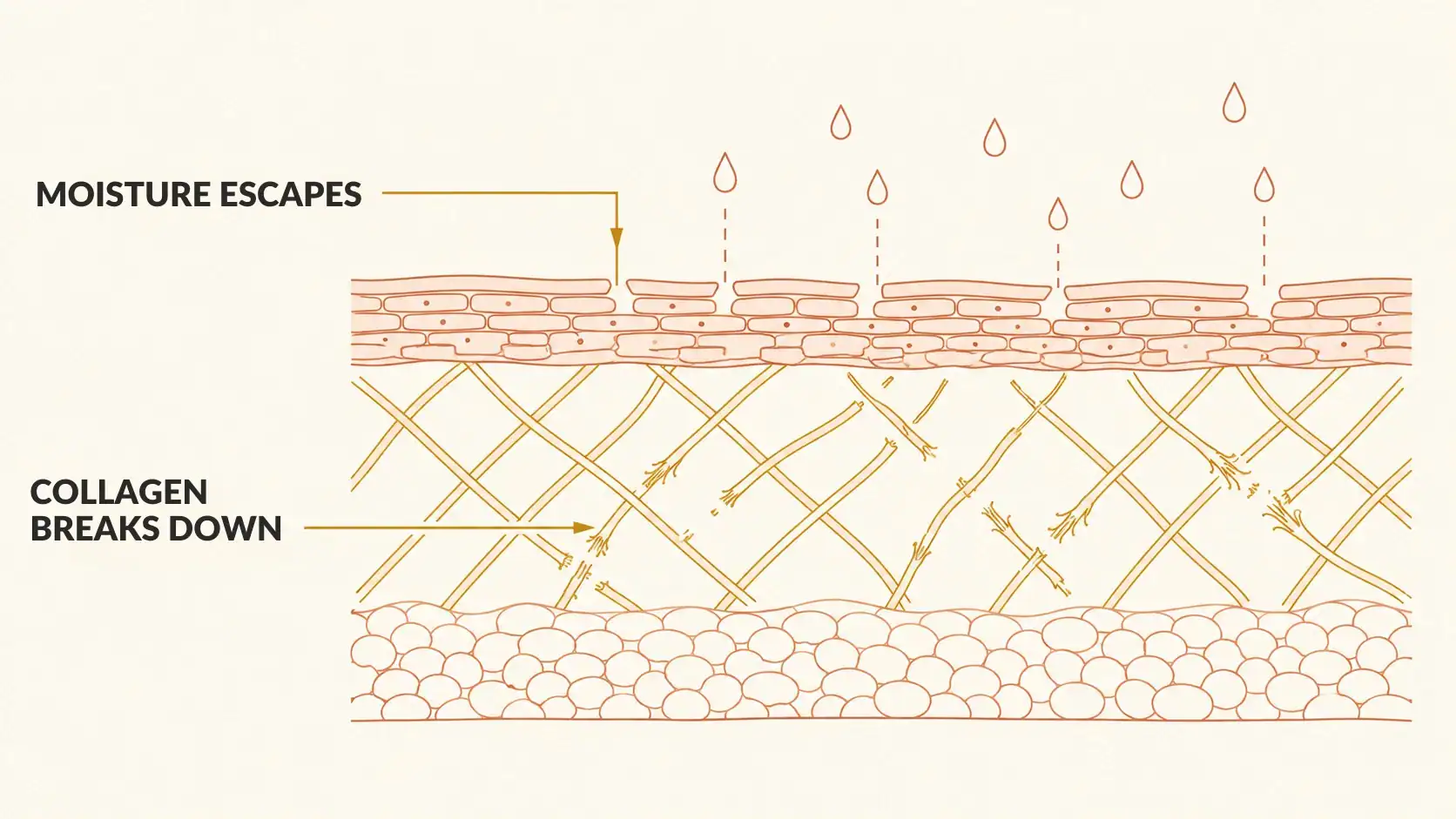
Starting in your mid-twenties — earlier than most people realize — your skin begins producing less collagen. Slowly at first. Barely noticeable. But by your 40s and 50s, the cumulative effect is significant. The collagen and elastin network that gives skin its structure, firmness, and bounce has thinned. The skin barrier — the outermost layer whose job is to hold moisture in — becomes less efficient. Water escapes faster than the skin can replenish it.
This is why the dryness comes back every afternoon even when you moisturized that morning. The cream didn't fail. It did exactly what it's designed to do — add moisture to the surface. But the surface isn't where the problem lives.
There's also an enzyme worth knowing about: MMP-1. It's produced naturally in the body, and its job is to break down collagen. The more MMP-1 your skin produces, the faster collagen breaks down — and the slower the conditions for new collagen formation become.
None of this is caused by a bad skincare routine. It's caused by a biological shift that happens from the inside — one that topical products were simply never designed to address.
Tight After You Wash. Dry by Afternoon. Less Spring When You Smile.
Your skin is built in layers. The outermost layer, the epidermis, functions as a barrier — keeping moisture in. When it starts to weaken, moisture escapes faster than it can be replaced. The clinical term is trans-epidermal water loss. The lived experience is that tight, parched feeling that shows up within hours of washing your face — even with moisturizer.
Beneath that sits the dermis — the deeper layer that holds the collagen and elastin network responsible for firmness and bounce. This is where the visible signs of aging actually originate. Not at the surface. And this is where MMP-1 does its damage: as MMP-1 activity increases with age and environmental exposure, collagen breaks down faster than it can be replenished.
A moisturizer can temporarily restore water to the surface layer. It cannot rebuild the barrier that's losing it. A topical collagen cream can sit on top of your skin — but the molecules are simply too large to reach the dermal layer where the collagen network actually lives.
Give It Time. That's Not a Catch. It's the Honest Part.

Here's something most supplement companies won't tell you upfront: this isn't going to work in three days. Not because it doesn't work. But because of what it's actually doing inside your body. Omega-7 supports change at a structural level — in your skin's barrier, in its collagen environment, in the way your cells function. That kind of change doesn't happen overnight. And it doesn't peak at two weeks and level off.
The study showed results building at week 4, week 8, and week 12 — every measurement point, the improvement continued. The women who stayed consistent the longest saw the most. One bottle is approximately one month. The science points to three months as the window where the real story starts to become clear.
That's worth knowing now — not as a sales tactic, but because the most common reason people don't get results from something that could genuinely help them is that they stop before it has time to do its job. They feel nothing at two weeks and conclude it doesn't work. Meanwhile, the women in the placebo-controlled study were just getting started at week four.
If you're going to try this, give it the time the research actually asked for. And if you do — and it still doesn't deliver what you were hoping for — there's a 365-day guarantee. Every penny back. No hoops, no questions designed to talk you out of it.

the thing it's been missing.
Six sections of science and research — and it all points to the same conclusion. Your skin isn't failing. It isn't beyond help. It's been working with an incomplete set of inputs. And no amount of product applied from the outside can fully compensate for what's been missing from the inside.
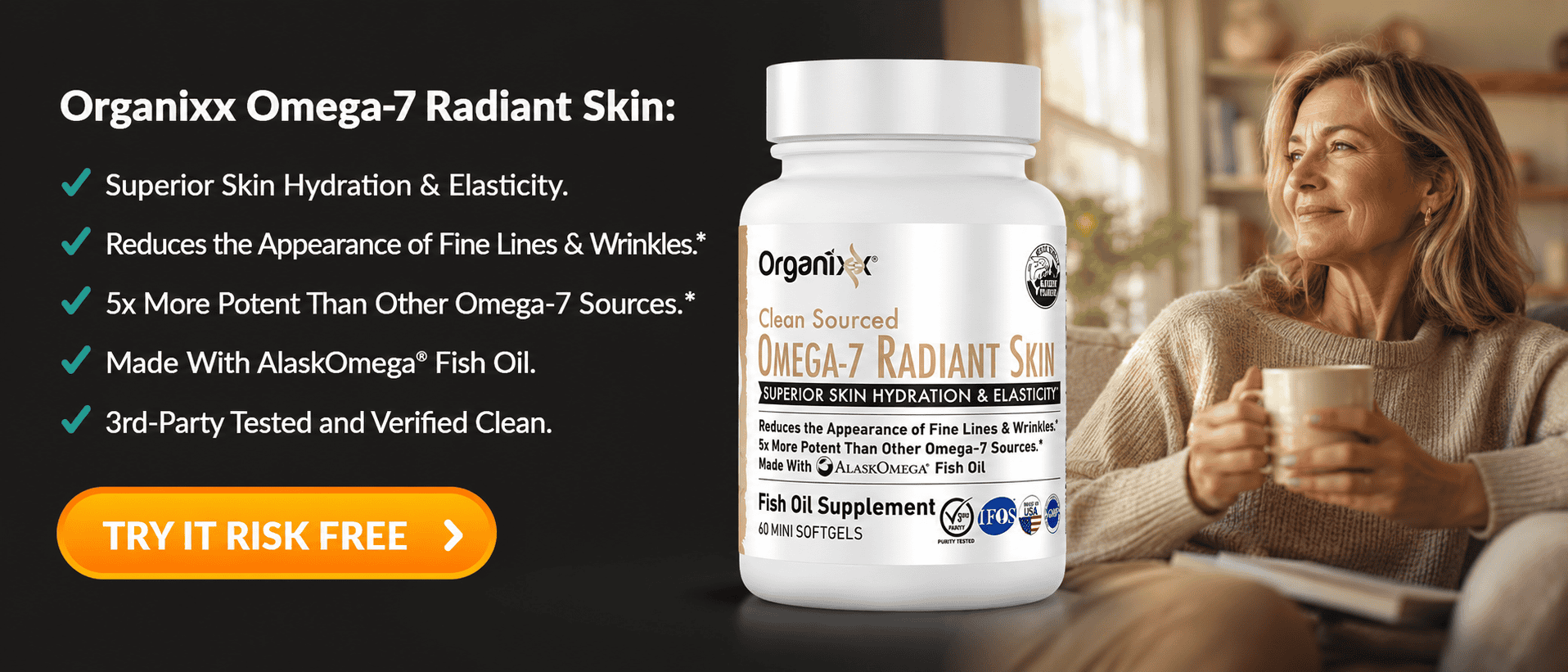
Omega-7 Radiant Skin by Organixx is the concentrated, purified Alaska Pollock fish oil standardized to 50% palmitoleic acid — the same source and concentration used in the 2024 clinical study published in Nutrients. MSC-certified. Refined in the USA. Third-party tested for purity and potency. Odorless. No fishy aftertaste.
One softgel, twice daily. That's it.
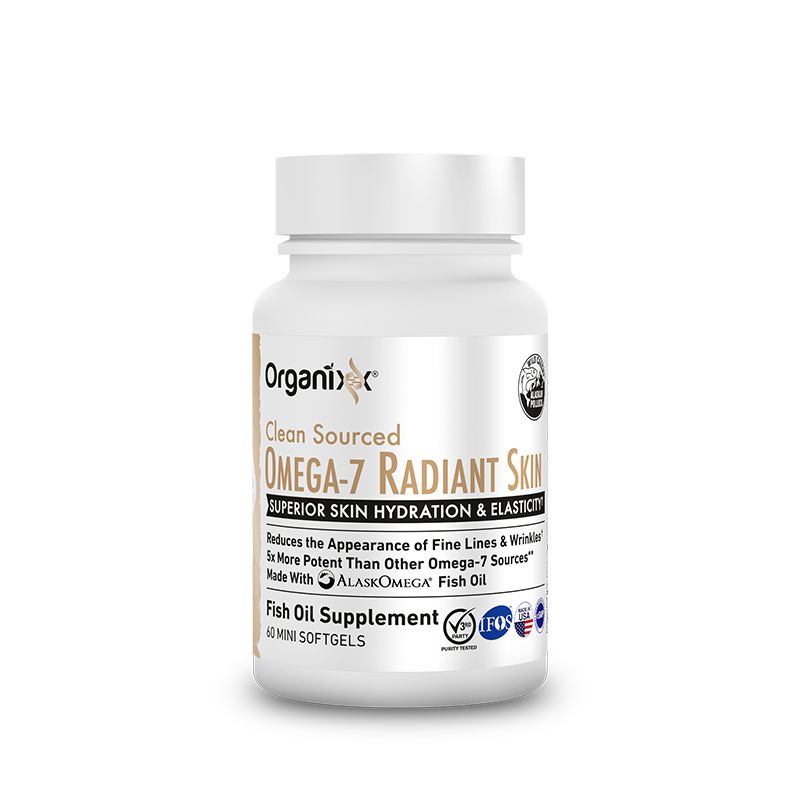
- One month to try it
- 365-day guarantee
- Odorless, burp-free
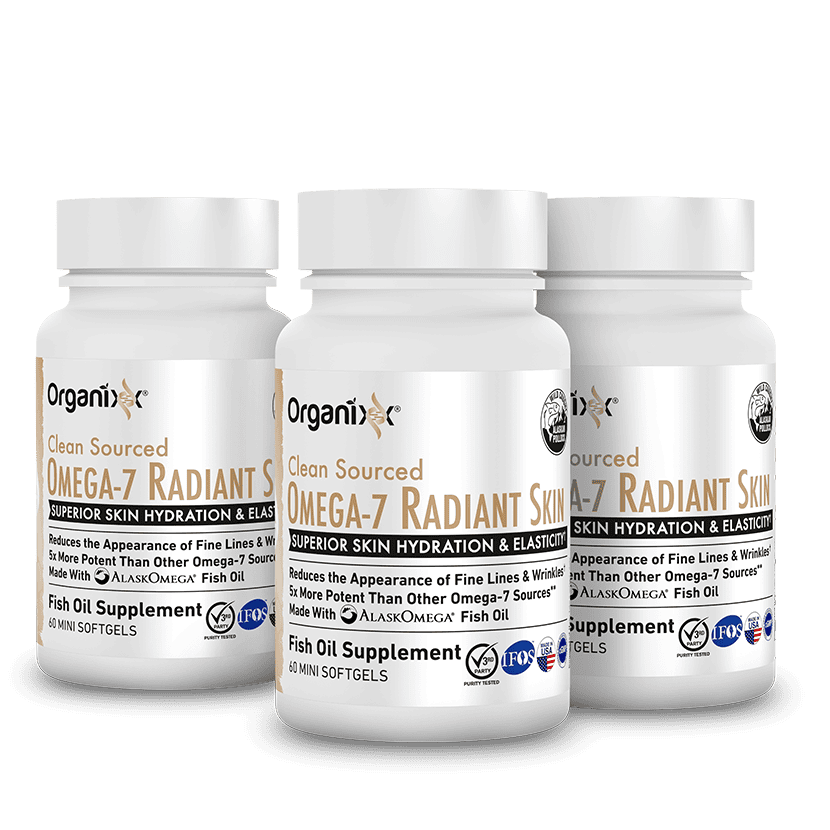
- The full 12 weeks the study ran
- 365-day guarantee
- Odorless, burp-free
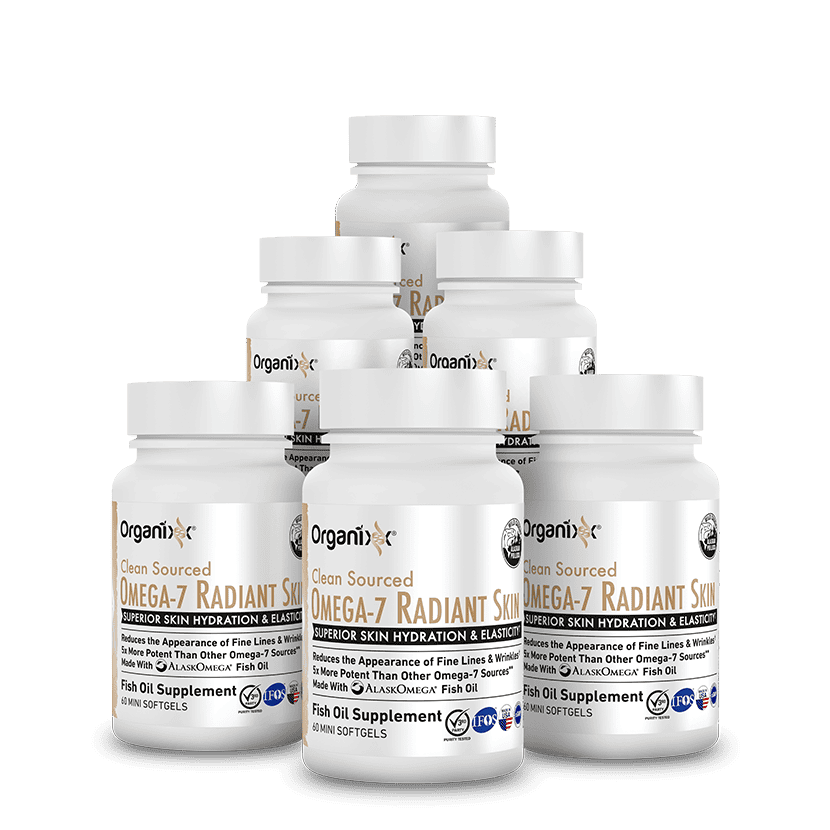
- Six months, no reordering
- 365-day guarantee
- Odorless, burp-free
Discount auto-applied at checkout
365-Day Money-Back Guarantee. Give it the full 12 weeks. If your skin doesn't feel and look meaningfully better — more hydrated, more resilient, fewer visible lines — send it back. Every penny returned. No time pressure, no fine print, no questions designed to talk you out of it.
"By week six my skin stopped feeling tight by mid-afternoon — the first thing that's ever worked from the inside."
"No fishy burps at all, and my fine lines look softer than they have in years. On my third bottle."
"Three months in and I finally stopped chasing it with creams. Wish I'd found it sooner."
The only thing you have to lose is the problem you've been trying to solve.